
Tai Chi Walking: The Complete Guide to This Foundational Movement
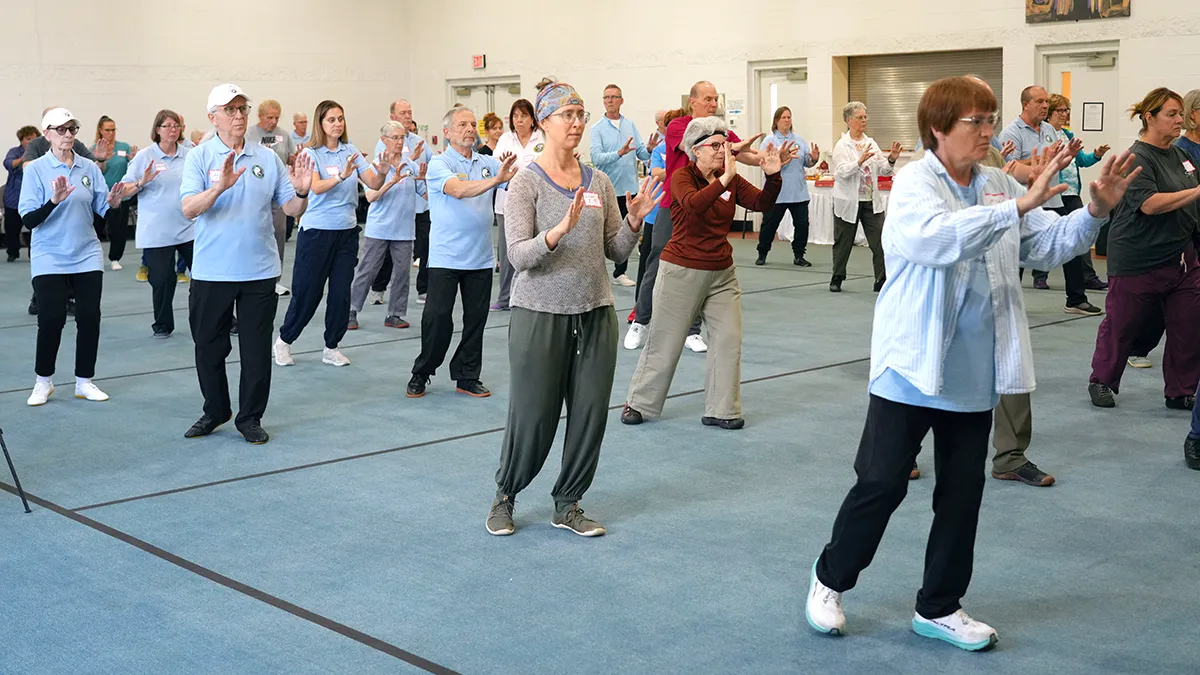
Understanding the stepping technique that develops balance and body awareness, and how it fits within complete Tai Chi training
By Dr Paul Lam, Founder, Tai Chi for Health Institute
Table of Contents
- What is Tai Chi Walking?
- Tai Chi Walking vs. Complete Tai Chi Sets
- How Tai Chi Walking Differs from Regular Walking
- Evidence-Based Health Benefits
- How Tai Chi Walking Works: The Mechanics
- Who Should Practise Tai Chi Walking?
- Getting Started with Tai Chi Walking
- Tai Chi Walking in TCH Programs
- Common Questions
- Your Path Forward
- About the Tai Chi for Health Institute
What is Tai Chi Walking?
Any activity has health benefits. Even just thinking about being active (intention) starts positive change. Human beings are made to move and to think, which is why something as basic as walking can be deeply valuable.
Walking is already wonderful for health, both mentally and physically. It supports fitness and circulation. It helps clear the mind and improves mood. Walking is natural, accessible to most people, and can be adapted to almost any age or fitness level.
Tai Chi Walking builds on this foundation by incorporating Tai Chi principles. It is a stepping technique that develops controlled weight transfer, balance, and whole-body coordination through slow, deliberate movement.
In regular walking, one foot steps forward with weight while you try to maintain balance as the other foot moves forward. This increases the chance of falling. Tai Chi Walking is different. You mindfully shift your weight to one leg and establish good balance before moving the other foot. This is done with correct posture, gently stretched muscles (often described in Tai Chi as Song) supporting the joints, and a calm mindset, significantly reducing the chance of falling.
This mindful weight transfer serves multiple purposes. It trains balance by requiring single-leg stability. It develops body awareness through mindful attention to weight distribution and good posture. It improves structural alignment by teaching proper knee, hip, and spine position. It also prepares you for complete Tai Chi forms, where this principle appears in every movement.
As Dr Paul Lam, Founder of the Tai Chi for Health Institute, explains:
“Tai Chi Walking is walking with mindfulness of Tai Chi principles: mindful weight transfer, maintaining balance, upright posture, and awareness. Combined with my dan tian breathing method, it is a good entry point into Tai Chi and a safe daily habit.”
Practising this foundational movement pattern provides significant, well-documented health benefits for balance, fall prevention, and joint health. It also prepares you for the deeper benefits of complete Tai Chi sets.
The Historical Context
In traditional Tai Chi training, walking drills were fundamental exercises that masters required students to practise, often for months, before teaching them complete forms. This wasn’t arbitrary. These seemingly simple stepping patterns develop the essential skills that underpin all Tai Chi movements: controlled weight transfer, structural alignment, balance, and present-moment awareness.
The technique evolved from martial arts training, where practitioners needed to move with stability, sensitivity, and efficient force transfer. Today, martial arts applications remain, but Tai Chi Walking has become valued primarily for its health benefits and its role as an accessible entry point into Tai Chi.
The Essential Tai Chi Principles
What transforms regular walking into Tai Chi Walking? The application of core Tai Chi principles:
- Mindful weight transfer: Consciously shifting your complete weight from one leg to the other, rather than relying on momentum
- Maintaining balance: Being stable on one leg during each weight shift
- Upright alignment: Keeping your body upright and supported through knees, hips, and spine
- Moving with awareness: Being mindful of your body, your movement, and your surroundings in each movement
These principles work together. When you apply them to walking, you transform a simple activity into a practice that trains both body and mind.
The Internal Key: Tai Chi Breathing (or Dan Tian Breathing)
Tai Chi breathing enhances the benefits of movement. It is not just “breathing deeply.” Dr Paul Lam’s dan tian breathing method is a modernised version of traditional Tai Chi breathing incorporating modern medical knowledge. It is a method of breathing that works with relaxation, posture, and mindful movement. It is especially easy to learn and even more effective in improving health.
This simple method induces diaphragmatic breathing that increases lung capacity by about 20%. It strengthens the deep stabiliser muscles that protect the spine and activates the parasympathetic nervous system, enhancing relaxation and healing.
Incorporating the right breathing enhances other principles and makes Tai Chi Walking more effective.
When you combine these three elements, you build layers of health benefits:
- Walking as the foundation
- Tai Chi principles for mindful movement
- Dan tian breathing for internal integration
Tai Chi Walking vs. Complete Tai Chi Sets
Before exploring the detailed mechanics of Tai Chi Walking, it’s important to understand where this technique fits within the broader landscape of Tai Chi training.
Dr Paul Lam, creator of the evidence-based Tai Chi for Health programs, offers this perspective:
“If we compare Tai Chi Walking with a complete, well-constructed Tai Chi set, it is like comparing one item of food to a whole, balanced diet.
A Tai Chi set is much more powerful because it involves the whole body and the whole mind. A full set systematically trains posture, balance, coordination, leg strength, trunk control, breathing, and mental focus, so it brings significantly more health benefits than Tai Chi Walking alone.
Tai Chi principles are based on a deep understanding of the laws of nature and Traditional Chinese Medicine. Their purpose is to cultivate qi most effectively. Qi is the life energy within all living beings; it is a life force that energises and mobilises the blood and body fluids. According to Traditional Chinese Medicine, the stronger qi a person has, the healthier they are.
We are born with a natural abundance of qi, but as we grow, qi diminishes. When it is totally gone, life expires. Tai chi’s immense health benefits come from its efficacy in preserving and strengthening qi.
A well-constructed Tai Chi set, like any of my Tai Chi for Health programs or traditional forms like the Yang 24 Forms, the Sun 73 Forms or the Combined 42 Forms, has the flow and rhythm that incorporates Tai Chi principles. This most effectively helps you cultivate qi, have more enjoyment in your training, and become healthier and happier. For these reasons, a good set is many times more effective than Tai Chi Walking alone.”
This doesn’t diminish the value of Tai Chi Walking. It serves as an accessible entry point and foundation for deeper practice.
The enjoyment factor: why people keep going with Tai Chi
There is another practical reason complete sets can be more effective than Tai Chi Walking alone: they are intrinsically more interesting.
Tai Chi Walking is wonderful. But full sets, when practised regularly, keep revealing layers. You feel an improvement in posture, then balance, coordination, calmness of mind, and better energy from strengthening the qi. The practice becomes more engaging as you continue to improve.
That is why Tai Chi for Health programs work so well for many people: they are designed specifically for health improvement, mind and body, with maximum benefit for minimum time, and they are safe and easy to learn. No hard training, no high-risk martial arts practice, just good, wonderful Tai Chi that supports better health and a clearer, calmer mind. They all focus on the most effective ways to cultivate qi.
And when people feel those changes, they naturally want to continue because the improvement of qi and deepening understanding of Tai Chi principles are intrinsically enjoyable. Being healthier, calmer and happier from stronger qi generates a sense of wellness that is so enjoyable it is almost addictive. Exploring the depth of Tai Chi is like exploring nature, it is fun and rewarding.
Tai Chi Walking Excels As:
An accessible entry point for complete beginners who want to start gently
A daily exercise that requires only 5-10 minutes, and it can be done in segments. For example, you can walk for a minute being mindful of the Tai Chi principles, and you will get a minute of benefits. If you do that 5 to 10 times per day, you can gain quite significant health benefits.
Foundation training for weight transfer and balance skills
Preparation for learning complete Tai Chi sets
Gentle movement for those with severe mobility limitations or recovering from injury
Complete Tai Chi Sets Provide:
Whole-body integration engaging the entire body including arms, legs, torso, internal organs and mind together
Comprehensive training in all Tai Chi principles systematically
Systematic progression through increasing depth and complexity
Greater Qi cultivation and life energy development
Deeper, more sustained health benefits across multiple systems
Flow and rhythm that makes training enjoyable and sustainable
Research-validated outcomes: Over 500 medical studies have shown the wide range of significant health benefits from Tai Chi. And over 30 medical studies have specifically validated the efficacy and safety of Dr Paul Lam’s Tai Chi for Health programs, which are practiced by millions worldwide.
The Ideal Approach
Many people find the most benefit by using Tai Chi Walking as a foundation or daily supplement while progressing to a complete Tai Chi for Health program for comprehensive training. This combination offers both accessibility and depth.
Think of it this way: practising scales develops finger strength and muscle memory for pianists, but playing complete pieces is where music truly comes alive. Scales prepare you, while pieces fulfil you. Tai Chi Walking prepares you, while complete Tai Chi sets allow your training to flourish.
How Tai Chi Walking Differs from Regular Walking
The most common question is: “Isn’t Tai Chi Walking just slow walking?”
The answer is no. Tai Chi Walking differs fundamentally because Tai Chi is a mind-body practice. It strengthens not only the joints and muscles but also internal qualities like tranquility, serenity, and clearer thinking. That calm mind supports the whole body, including organs, nervous system, posture, and balance. This integration transforms simple walking into Tai Chi Walking. It improves qi, thus health in general.
Understanding the difference requires looking beyond the obvious pace.
Side-by-Side Comparison
| Aspect | Regular Walking | Tai Chi Walking |
|---|---|---|
| Weight Transfer | Momentum-based, passive transitions | Controlled, active 100% shift |
| Foot Placement | Automatic, unconscious | Deliberate, mindful attention |
| Pace | Natural speed for efficiency | Slow, measured for awareness |
| Focus | Destination or distraction | Process of each step |
| Balance Demand | Low (both feet often grounded) | High (single-leg stability moments) |
| Muscle Engagement | Intermittent, momentum-driven | Continuous, conscious control |
| Breathing | Automatic | Coordinated with movement |
| Purpose | Transportation, cardiovascular exercise | Training balance, posture, awareness and qi cultivation more effectively |
The Key Distinctions
1. Weight Transfer Method
In regular walking, you use momentum. You lean forward slightly, let gravity help you fall into the next step, and catch yourself with the forward foot. Both feet often share weight during the transition. There’s nearly always some weight on both feet as you move. Your body moves somewhat automatically.
In Tai Chi Walking, you consciously shift weight to one leg and achieve good balance before lifting the other foot. Before lifting a foot, you ensure it carries absolutely zero weight. You should be able to lift it without any effort, as though it’s floating. There’s a deliberate moment where you’re balanced entirely on one leg. No momentum, no leaning forward, no passive falling into the step. Every weight shift is controlled and mindful. This complete weight transfer is a cornerstone skill that transfers to all Tai Chi movements and the keystone of reducing falls.
2. Continuous Mindful Attention
Regular walking is typically automatic. Your body does it without conscious thought. Your mind is free to wander, plan, or engage in conversation. This autopilot mode is efficient for daily life.
Tai Chi Walking requires full attention to each step. You notice how the foot lands (heel first), how weight transfers gradually through the foot, how the standing leg feels, how your spine stays upright and supple. Some practitioners describe this sustained attention as a form of moving meditation.
3. Structural Precision
In regular walking, your body generally finds adequate alignment through habit and necessity. You’re not thinking about knee position, hip rotation, or spinal alignment.
Tai Chi Walking emphasises precise structure. Knees track over toes (never past). Hips stay level and centred. Spine remains upright without leaning. Shoulders relax. All muscles are Song and supple to improve balance to reduce chance of injury. Each element receives conscious attention and refinement.
4. The “Empty” Foot Principle
Perhaps the most fundamental difference: in regular walking, you never fully “empty” a foot before moving it. There’s nearly always some weight on it as you transition.
In Tai Chi Walking, before lifting a foot, you ensure it does not carry weight. It’s completely “empty.” You should be able to lift it without any effort, as though it’s floating. This complete weight transfer is the cornerstone skill that transfers to all Tai Chi movements.
What This Means in Practice
When practising Tai Chi Walking, you might cover only a few metres in several minutes. You’re not trying to get anywhere. Instead, you’re refining the quality of movement, developing balance, and training your nervous system to maintain stability during controlled weight shifts.
This is why Tai Chi Walking, while seemingly simple, offers profound training benefits that regular walking (even slow walking) cannot provide.
You can also mix both approaches. While walking somewhere, if time and space allow, incorporate a minute or two of mindful Tai Chi Walking. Even brief moments here and there add up to significant health benefits and enjoyment.
Evidence-Based Health Benefits of Tai Chi Programs
Tai Chi Walking, as a foundational element of Tai Chi, contributes to the well-documented health benefits of Tai Chi training. Research on complete Tai Chi programs, particularly the Tai Chi for Health programs, demonstrates substantial, measurable improvements across multiple health domains.
Fall Prevention & Balance Improvement
The world’s largest fall prevention study, funded by the New South Wales Health Department in Australia, found that recurring falls were reduced by nearly 70% amongst participants practising Tai Chi for Arthritis. This program incorporates Tai Chi Walking principles as foundational training.
The Centers for Disease Control and Prevention (CDC) recognises Tai Chi for Arthritis and Fall Prevention as an evidence-based intervention. The CDC notes that approximately one in three adults aged 65 and older experiences a fall each year, with Tai Chi proving effective at reducing this risk.
How Tai Chi Walking Contributes:
- Trains single-leg stability through repeated weight shifts
- Develops proprioceptive awareness (knowing the position and movement of your body)
- Strengthens stabilising muscles in legs and core
- Improves confidence in balance, reducing fear of falling
- Teaches controlled weight transfer applicable to daily activities
- Helps to clear your mind and to reduce stress which will, in turn, reduce the chance of falling
Arthritis Pain Relief & Joint Health
Research published in the Journal of Rheumatology studied older adults with arthritis who practised Tai Chi for 12 weeks. Results showed 35% reduction in pain, 29% reduction in stiffness, 29% improvement in ability to perform daily tasks such as climbing stairs, and improved balance and overall sense of wellbeing.
The largest Tai Chi for Arthritis study, conducted by Professor Leigh Callahan at the University of North Carolina with 354 participants, confirmed significant pain relief, reduced stiffness, and better ability to manage daily living after 8 weeks of practicing Tai Chi for Arthritis and Fall Prevention.
How Tai Chi Walking Supports Joint Health:
- Gentle weight-bearing exercise strengthens bones and muscles supporting joints
- Strengthens the deep stabiliser muscles in major joints like spine, hips and shoulders to improve joint health
- Slow, controlled movement lubricates joints through full range of motion
- Reduced impact compared to walking or jogging
- Improved alignment reduces compensatory stress on joints
- Enhanced circulation of fluid inside the joints supports healing and reduces inflammation
Cognitive Function & Mental Clarity
Research demonstrates that Tai Chi offers cognitive benefits beyond simple cardiovascular exercise. Studies show that activities combining physical movement with cognitive demand, such as the mindful attention required in Tai Chi Walking, improve mental processing speed and function more effectively than cardiovascular activity alone.
Cognitive Benefits Include:
- Dual-task training: simultaneously managing physical movement and mental attention
- Improved working memory in older adults
- Enhanced inhibition control (the ability to filter thoughts and focus)
- Reduced symptoms of depression and anxiety
- Increased mindfulness and present-moment awareness
How Tai Chi Walking Trains the Brain:
- Requires sustained attention to weight distribution, alignment, breathing
- Develops mind-body connection through proprioceptive feedback
- Provides meditative focus that calms racing thoughts
- Challenges balance, which engages cognitive resources
- Creates “flow state” of focused, peaceful awareness
- The dan tian breathing method increases lung capacity by 20%, thus providing more oxygen to transport to the brain
Stress Reduction & Nervous System Regulation
Tai Chi Walking’s slow, deliberate pace and coordinated breathing naturally activate the parasympathetic nervous system (the body’s “rest and digest” mode). This counters chronic stress responses and promotes relaxation.
Stress-Reduction Mechanisms:
- Deep, natural diaphragmatic breathing increases oxygen and reduces cortisol
- Slow movement pace signals safety to the nervous system
- Mindful attention interrupts worry and rumination
- Meditative quality provides mental respite
- Gentle physical activity releases endorphins
Regular training can help manage anxiety, improve sleep quality, and increase overall emotional resilience.
Posture & Structural Alignment
Modern life (sitting at desks, looking at phones, driving) often creates postural imbalances and compensatory movement patterns. Tai Chi Walking actively retrains healthy alignment.
Postural Benefits:
- Strengthens core (deep stabiliser) muscles that support upright posture
- Develops awareness of spinal alignment
- Corrects forward head position and rounded shoulders
- Teaches proper knee-over-toe alignment
- Reduces lower back strain through centred hip position
- Creates lasting postural improvements that transfer to daily life
Who Benefits Most?
Research and clinical experience show Tai Chi particularly benefits older adults (50+) concerned about falls or balance, people with arthritis (osteoarthritis or rheumatoid), those recovering from injury or surgery requiring gentle rehabilitation, anyone with balance disorders or neurological conditions affecting stability, people experiencing chronic stress or anxiety, and individuals with mobility limitations who need low-impact exercise.
Important Context: Complete Training Provides Greater Benefits
While Tai Chi Walking contributes to these outcomes, the research overwhelmingly studies complete Tai Chi programs, not walking drills in isolation. As Dr Lam notes, complete sets provide more comprehensive training and typically produce stronger, more sustained benefits. Tai Chi Walking serves as an entry point and foundational technique, with complete programs offering the full depth of benefit.
For detailed research findings, visit our published medical studies page.
How Tai Chi Walking Works: The Mechanics
Understanding how Tai Chi Walking works (the specific mechanics and principles) helps you train more effectively and appreciate why this simple-seeming activity provides profound benefits.
The Weight Transfer Principle
The foundational principle is complete, controlled weight transfer.
Video: Dr Lam Teaches Tai Chi Walking (Stepping Forward)
Before diving into the detailed mechanics, watch Dr Paul Lam demonstrate Tai Chi Walking in this lesson from the Tai Chi for Beginners program. Seeing the movement helps make the written instructions clearer.
This video covers forward walking (Movement One: Stepping Forward). Note that Backward walking is taught in the full program.
In the video, Dr Lam breaks down each element: the weight shift sequence, proper knee alignment, adding the turn with your hip, and practising both left and right sides in a flowing sequence. He also explains how to build leg strength gradually without strain.
After watching, continue reading below for detailed written instruction you can reference during practice. For complete training including backward walking and the full Tai Chi for Beginners form, explore the Tai Chi for Beginners Online Lessons.
Starting Position:
- Stand with feet shoulder-width apart
- Weight distributed equally (50/50) between both feet
- Knees slightly bent, never locked
- Spine upright, shoulders relaxed
- Arms can rest naturally at sides or hands can rest on hips
The Weight Shift Sequence:
- Shift 100% of weight to one leg (let’s say the right leg). Feel your weight sink completely into the right foot. The right leg becomes your “substantial” leg (full weight). The left leg becomes “insubstantial” (no weight).
- Test the “empty” foot. The left foot should be so light you could lift it without effort. Toes may barely touch the ground or lift completely. This is a true “empty” or “weightless” foot.
- Return weight to centre (50/50). Shift weight completely to left leg. Feel right foot become light. Lift right foot slightly to confirm. Return weight to centre. Repeat several times on both sides, developing sensitivity to weight distribution. Once you get the feel of shifting weight completely to one leg, you can move on to the next step without repeating the testing.
- Move the “empty” foot forward. With weight completely on one leg, slowly step forward with the other foot. Place heel first (heel touches ground gently). Then gradually lower entire foot flat. Toes still carry no weight; foot is still “empty.”
- Gradually shift weight forward. Slowly transfer weight from back leg to front leg. This is not a sudden plop; it is a controlled, continuous flow. Front leg gradually becomes “substantial.” Back leg gradually becomes “insubstantial.”
- Repeat with opposite leg.
Key Point: Before moving a foot, it must be completely “empty” or “insubstantial”. Before stepping, you should be well balanced with your weight completely on the other leg.
Understanding the “Empty” or “Insubstantial” Foot
The empty foot concept seems simple but often confuses beginners. Here’s what it means:
A truly empty foot:
- Carries zero weight (not just “light”, actually zero)
- Can be lifted effortlessly
Common mistakes:
- Keeping 10-20% weight on the “empty” foot (this is “double-weighting”)
- Moving a foot before it’s truly empty
Why this matters:
- True single-leg balance training only occurs when one foot is completely empty
- Double-weighting creates instability and reduces training benefit
- Learning to sense when a foot is truly empty develops profound body awareness
Structural Elements: Proper Alignment
Tai Chi Walking requires specific structural positions that may feel unnatural at first but become comfortable with training.
Knee Alignment:
- Knees track directly over toes (not inward or outward)
- Never allow knee to extend past toes
- Maintain gentle bend; never lock knees straight
- This protects knee joints and engages muscles properly
Hip Position:
- Hips stay level (not tilted left or right)
- Hips remain centred between feet (not pushed forward or back)
- Pelvis in neutral position (not tilted excessively forward or tucked under)
- This creates stable base for spine
Spine Alignment:
- Spine upright, as if suspended from above
- Not leaning forward, backward, or to either side
- Natural curves maintained, not forced straight
- Head balanced on top, chin slightly tucked
Foot Placement:
- Feet point forward or slightly outward (no more than 45 degrees)
- This angle provides stability and protects knees
- Heel touches the ground first, then full foot lowers
- Step length moderate, not too short or overextended
Shoulders and Arms:
- Shoulders relaxed, not hunched or tense
- Arms hang naturally or hands rest lightly on hips
- No tension in hands, wrists, or elbows
Forward Walking vs. Backward Walking
Tai Chi Walking can be practised moving forward, backward, or (in advanced training) sideways. Each direction offers different challenges and benefits.
Forward Walking:
- Most natural direction, easier for beginners
- Prepares for movements like “Parting the Wild Horse’s Mane”
- Trains forward weight shifts and controlled stepping
- Develops confidence in single-leg balance when moving ahead
Backward Walking:
- More challenging for balance and coordination
- Prepares for movements like “Repulse Monkey”
- Trains backward weight shifts and spatial awareness
- Develops trust and confidence moving in non-visual direction
- Often reveals and corrects balance weaknesses
- 20% of falls occur when stepping backward; this practice reduces that risk
Technique for Backward Walking:
- Shift weight fully to front leg
- Back leg becomes empty
- Step back with empty leg (toes touch first, then full foot)
- Gradually shift weight to back leg
- Front leg becomes empty, ready to step
Both directions complement each other and together provide comprehensive balance training.
Breath Coordination
Breathing in Tai Chi Walking should be natural, not forced or held. The dan tian breathing method is ideal to gently coordinate breathing with movements.
Basic Pattern:
- Inhale as you shift weight to gather/prepare, moving upward and toward the body
- Exhale as you step and shift on the foot
- Allow breath to flow naturally, not mechanically
- Breathe out on movements that deliver force, moving downward and away from the body
Key Principles:
- Never hold your breath, never force your breathing. If in doubt, let go and allow your body to take over the breathing.
- Breathe through nose when possible (more calming for nervous system)
- Keep breathing deep and relaxed, not shallow and tense
- If you find yourself breathing rapidly or holding breath, you’re moving too quickly or tensing unnecessarily. Slow down and relax, and let your body take over the breathing naturally.
The breath coordination happens naturally with ongoing training. Don’t force it; allow it to emerge organically.
Common Technical Mistakes to Avoid
1. Rushing the pace. Moving too quickly defeats the training purpose. Take at least 3-5 seconds per step. Remember: you’re not trying to get anywhere.
2. Incomplete weight transfer. Keeping weight on both feet (double-weighting). Moving foot before it’s truly empty. Solution: Pause and test. Can you lift your “empty” foot effortlessly?
3. Looking down at your feet. This disrupts balance and posture. Eyes should gaze naturally forward at eye level. Use peripheral vision to sense ground, not direct gaze.
4. Tense shoulders or held breath. Tension blocks energy flow and creates fatigue. Consciously soften shoulders, or Song your muscles around the joints. Ensure breathing remains natural and easy.
5. Leaning forward or backward. Spine should remain upright throughout. Avoid leaning to “reach” the next step. Solution: Imagine a string gently pulling the top of your head towards the sky.
6. Knee extending past toes. This stresses the knee joint. Keep the knee directly above the ankle, never ahead of it. Adjust stance width if needed to maintain proper alignment.
What Correct Training Feels Like
When training properly, you should experience calm mental focus on most steps, gentle physical effort in standing leg (but not strain), smooth, continuous weight shifts without jerky movements, sense of grounding through standing leg, balance and stability even during single-leg moments, and natural, easy breathing.
If you feel strain, wobbling, breathlessness, or confusion, slow down further, simplify your training, or seek guidance from a certified Tai Chi instructor.
Who Should Practise Tai Chi Walking?
One of Tai Chi Walking’s greatest strengths is its universal accessibility. With appropriate modifications, virtually anyone can train and benefit.
Universal Accessibility
Tai Chi Walking requires no equipment or special clothing, minimal space (a few metres of clear floor), no prior Tai Chi experience, and no particular fitness level. This makes it accessible in settings from living rooms to parks, for people from young adults to those in their 90s.
Particularly Beneficial For:
Older Adults (50+)
Balance, stability, and fall prevention become increasingly important with age. The CDC reports that one in three adults aged 65+ experiences a fall each year, often with serious consequences including fractures and loss of independence.
Benefits for older adults: Reduced fall risk through improved balance, maintained mobility and independence, gentle exercise appropriate for aging joints, social connection when practised in groups, and cognitive stimulation through mindful movement.
People with Arthritis
Both osteoarthritis and rheumatoid arthritis benefit from gentle, controlled movement that doesn’t stress inflamed or deteriorating joints.
Specific benefits for arthritis: Reduced pain and stiffness (supported by clinical research), improved joint mobility through gentle range-of-motion work, strengthened supporting muscles without joint impact, weight-bearing exercise for bone health, and low barrier to entry (can start very gently and progress gradually).
For those with arthritis, progression to the complete Tai Chi for Arthritis program provides even greater benefit, but Tai Chi Walking offers an excellent starting point.
Balance and Stability Concerns
Anyone experiencing balance difficulties (from neurological conditions, stroke recovery, inner ear disorders, or simply age-related decline) can benefit from Tai Chi Walking’s targeted balance training.
Why it helps balance issues: Safe, controlled environment to work on balance, progressive challenge (can start with support, gradually remove it), trains both static balance (standing still) and dynamic balance (while moving), builds confidence (which itself improves balance), and addresses fear of falling through safe, gradual training.
Stress, Anxiety, and Mental Health
The meditative quality of Tai Chi Walking provides mental health benefits alongside physical ones.
Mental health applications: Mindful movement interrupts anxious thought patterns, slow, deliberate pace calms nervous system, present-moment focus provides respite from worry, gentle exercise releases mood-lifting endorphins, and is accessible when more vigorous exercise feels overwhelming.
Rehabilitation and Recovery
Physical therapists and rehabilitation specialists increasingly recommend Tai Chi Walking for patients recovering from injury, surgery, or illness.
Rehabilitation benefits: Very low impact, appropriate for healing tissues, can be adapted to nearly any limitation, progressive difficulty (starts easy, builds gradually), retrains proper movement patterns, and rebuilds confidence in movement.
The Tai Chi for Rehabilitation program provides structured progression for those in recovery.
Tai Chi Students
For those learning Tai Chi forms, dedicated Tai Chi Walking training refines foundational skills.
Value for Tai Chi students: Isolates and enhances weight transfer skill, corrects double-weighting habits, develops structural alignment awareness, provides simple drill to warm up before forms, and reveals and addresses balance weaknesses.
Many Tai Chi instructors use walking drills extensively with students, recognising that mastering this foundation makes subsequent forms easier to learn.
Modifications & Adaptations
Tai Chi Walking can be modified for various limitations:
For Limited Mobility
Seated Tai Chi Walking: Practise weight shifts while seated on a chair. Alternate lifting heels and toes to simulate stepping. Focus on weight transfer side-to-side in seated position. Utilising visualisation techniques is shown by studies to improve muscle strength and other health components like lung capacity and mental strength. Excellent for those unable to stand for extended periods.
See our Seated Tai Chi for Arthritis program for comprehensive seated training.
For Balance Concerns
Using Support: Train near a wall, holding lightly for stability. Use chair back for light support during weight shifts. Gradually reduce reliance on support as confidence builds. No shame in using support; it’s a smart, safe progression.
For Joint Pain or Stiffness
Adjusting Stance: Reduce step length (smaller steps). Use a higher stance (less knee bend). Shorten training duration, practise more frequently. Stop if experiencing pain (slight discomfort is ok, but not pain).
For Beginners
Simplifying Training: Start with just forward walking. Train 5 minutes initially, build gradually. Focus on one element at a time (first weight shift, then breathing, then alignment). Don’t worry about perfection; consistency matters more.
Who Should Seek Medical Clearance First?
While Tai Chi Walking is generally very safe, consult your healthcare provider before beginning if you have uncontrolled cardiovascular conditions, recent surgery or injury, severe osteoporosis, acute joint inflammation, balance disorders requiring medical supervision, or any condition where falls pose serious risk.
Most healthcare providers enthusiastically support Tai Chi training, but it’s wise to discuss your specific situation.
The Bottom Line
If you can stand and take a step, you can train some form of Tai Chi Walking. The technique scales beautifully from those with limitations to highly fit individuals, each finding appropriate challenges and benefits at their level.
Getting Started with Tai Chi Walking
Quick Start: Five Simple Steps
- Stand tall and relax with shoulders loose
- Step slowly and smoothly
- Shift weight mindfully before each step (heel touches first, then full foot, then complete weight transfer)
- Add gentle Tai Chi (dan tian) breathing
- Stay present and notice your posture, movement and calmness
For detailed guidance, continue reading below.
Beginning Tai Chi Walking requires no special preparation, but a few guidelines will help you start safely and effectively.
Before You Begin
Safety Considerations:
- Clear your training area of obstacles, rugs, or tripping hazards
- Wear flat, comfortable shoes or train barefoot (indoor)
- Use non-slip surface
- Have wall or sturdy chair nearby if balance is a concern
- Ensure adequate lighting to see clearly
- Start after any dizziness from standing up has passed
Optimal Training Conditions:
- Quiet environment with minimal distractions
- Comfortable temperature (not too hot or cold)
- Space to walk at least 3-5 metres in one direction
- Time when you won’t be rushed or interrupted
Recommended Training Duration:
- Beginners: 5-10 minutes
- Intermediate: 10-15 minutes
- Advanced or as meditation: 15-30 minutes
You can train any time of day. Many find morning sessions set a calm tone, and evening training releases the day’s tensions.
Basic Training Framework
1. Starting Position
- Stand with feet shoulder-width apart
- Distribute weight equally between both feet
- Knees slightly bent, not locked
- Spine upright, shoulders relaxed
- Arms hang naturally or hands rest on hips
- Take three deep, calming breaths
2. First Weight Shifts (Before Walking)
- Gently shift weight completely to right leg
- Feel left foot become light; lift it slightly to confirm it’s truly empty
- Return weight to centre (50/50)
- Shift weight completely to left leg
- Feel right foot become light; lift slightly to confirm
- Return to centre
Repeat several times, developing sensitivity to weight distribution. Once you are comfortable with the sensitivity of weight distribution, then there is no need to repeat unless you prefer to.
3. First Steps Forward
- Shift 100% weight to right leg
- Ensure left foot is completely empty (test by lifting)
- Slowly step forward with left foot
- Place heel first, then lower full foot gently
- Gradually shift weight forward to left leg
- Right foot becomes empty
- Step forward with right foot
- Continue this pattern
4. Maintaining Awareness
- Notice each weight transfer
- Feel standing leg support you completely
- Sense empty foot’s lightness
- Keep spine upright, shoulders relaxed
- Breathe naturally or use dan tian breathing comfortably
- When reaching end of space, pause, turn carefully, continue
5. Closing
- Bring feet back to shoulder-width
- Stand quietly for a moment
- Notice how your body feels
- Take three calming breaths
Common Beginner Challenges (and Solutions)
Challenge 1: “I wobble when standing on one leg”
- Solution: Use wall for light support while building strength
- Solution: Reduce knee bend (higher stance)
- Solution: Ensure you’re truly shifting 100% weight before lifting foot
- Expectation: Some wobbling is normal at first; it improves rapidly with training. If it persists, see your health professional.
Challenge 2: “I can’t move this slowly without getting impatient”
- Solution: Start with slightly faster pace, gradually slow over weeks
- Solution: Set timer for just 3-5 minutes so you know there’s an endpoint
- Solution: Focus on breath to anchor your wandering mind. If you haven’t already, using the dan tian breathing method can help. Try learning to enjoy the mental tranquility from being slow and mindful.
- Perspective: Impatience is a mental habit; slow movement trains patience itself
Challenge 3: “I’m not sure if I’m doing it right”
- Solution: Film yourself from side angle, review your alignment
- Solution: Use self-assessment questions (below)
- Solution: Consider attending a class or working with instructor periodically
- Reminder: Perfection isn’t the goal; consistent training is
Challenge 4: “It feels boring or repetitive”
- Solution: Shift focus to internal sensations rather than external movement
- Solution: Train with soothing background music
- Solution: Alternate between forward and backward walking for variety
- Solution: Consider joining a Tai Chi class
- Reframe: Repetition is meditative, not boring (like breathing or waves)
Challenge 5: “My knees/hips/back hurt”
- Solution: Reduce depth (less knee bend, higher stance)
- Solution: Shorten training duration, train more frequently
- Solution: Check alignment (knee over toes, spine upright, no leaning)
- Important: Mild muscle fatigue is normal; joint pain is not. Adjust or consult your healthcare provider.
Self-Assessment Questions
After training, ask yourself:
Balance & Stability:
- Can I pause mid-step without wobbling?
- Can I lift my empty foot easily, without effort?
- Do I feel stable on my standing leg?
Alignment:
- Are my knees tracking over my toes (not past them)?
- Is my spine upright (not leaning)?
- Are my shoulders relaxed (not tense)?
Breathing & Relaxation:
- Am I breathing naturally (not holding breath)?
- Am I using the dan tian breathing method correctly?
- Does my jaw feel relaxed?
- Are my hands and arms free of tension?
Mental State:
- Am I present with each step (not mind-wandering)?
- Do I feel calmer than when I started?
- Am I enjoying the training (at least somewhat)?
If you can answer “yes” to most questions, you’re on the right track. Areas where you answer “no” show you where to focus refinement.
When to Seek Instruction
Many people successfully learn Tai Chi Walking from written or video instruction. But working with a certified Tai Chi instructor offers more benefits. Personalised correction of alignment and technique, answers to your specific questions, social connection and encouragement, progression to complete Tai Chi forms, and accountability for consistent training.
Find a certified Tai Chi for Health Institute instructor in your area, or consider our Online Tai Chi for Beginners program which includes detailed video instruction and progressive training.
Making It a Sustainable Habit
The key to benefit is consistency, not perfection. Here’s how to make Tai Chi Walking a lasting habit:
Anchor it to an existing routine: After morning coffee. Before evening meal. During lunch break at work. While waiting for dinner to cook.
Keep expectations realistic: Missing a day doesn’t erase progress. Five minutes daily beats 30 minutes weekly. Focus on how it feels, not how it looks. Progress is gradual, not dramatic.
Notice and celebrate benefits: Better balance in daily activities. Calmer mental state. Improved posture. Reduced stress. These reinforce the habit.
Consider it self-care, not another task: This is time for you. It’s a meditative respite from demands. Not something to “get through” but to savour.
With consistent training, Tai Chi Walking becomes something you look forward to: a peaceful, restorative daily ritual.
Tai Chi Walking in TCH Programs
Tai Chi Walking serves as foundational training within the comprehensive Tai Chi for Health programs, preparing students for the richer experience of complete Tai Chi sets.
How Tai Chi Walking Prepares You for Forms
Every Tai Chi form contains numerous weight shifts, turns, and stepping patterns. The skills developed through Tai Chi Walking (complete weight transfer, empty foot awareness, structural alignment, and balance) directly transfer to form training.
Specific connections:
Forward Tai Chi Walking prepares you for movements such as Parting the Wild Horse’s Mane, Brush Knee and Push, and Fair Lady Works the Shuttles.
Start with the Tai Chi for Beginners program and its Six Easy Steps. You can follow the steps from Step One onwards, or for Tai Chi Walking specifically, use Step Five: Foundation Movements. Movement One is walking forward. This fits seamlessly with the Tai Chi Walking you have learned so far and also teaches you additional techniques with more tai chi principles.
Backward Tai Chi Walking prepares you for Repulse Monkey, Step Back and Repulse Monkey, and backward weight shifts in various movements. Likewise, Movement Four: Stepping Backward in Tai Chi for Beginners fits seamlessly and provides extra skill.
Students who master Tai Chi Walking before learning full Tai Chi sets find learning new forms much easier and faster.
Integration in Tai Chi for Health Programs
Tai Chi for Beginners
The Tai Chi for Beginners program contains Six Easy Steps, including warming up, breathing and qigong exercises, and then uses Tai Chi Walking extensively in early lessons as the foundation for all subsequent movements. You’ll learn proper weight transfer technique, forward and backward walking variations, how walking principles apply to the eight basic movements, and progressive integration into flowing sequences.
This program is ideal for those new to Tai Chi who want systematic, comprehensive training from the ground up.
Tai Chi for Arthritis and Fall Prevention
Tai Chi for Arthritis and Fall Prevention incorporates Tai Chi Walking adapted specifically for joint health. Higher stances to reduce knee stress, emphasis on smooth, controlled movement, integration of Qigong breathing, and progressive difficulty suitable for arthritis management.
There is also particular emphasis on fall prevention through single-leg stability, confidence-building progression, safe training with modifications, and integration with this complete 12-movement set.
This program has been validated in over 30 controlled clinical trials and is recognised by the CDC as an evidence-based fall prevention intervention and by the National Council on Aging. Tai Chi for Arthritis and Fall Prevention is the basis of the research that showed nearly 70% reduction in recurring falls.
There is also a seated version available.
Other TCH Programs
Tai Chi Walking appears as foundational or preparatory training in Tai Chi for Energy (for Qi cultivation), Tai Chi for Rehabilitation (gentle recovery movement), Tai Chi for Memory (cognitive-physical training), and Tai Chi for Heart Conditions (gentle cardiovascular conditioning).
For Those Who Want to Teach Tai Chi
If you’re interested in teaching Tai Chi (whether professionally or to share with your community), proper instructor training is essential.
The Tai Chi for Health Institute Instructor Certification provides comprehensive training in program teaching methodology, understanding of how to teach Tai Chi Walking safely and effectively, certification recognised by health organisations worldwide, ongoing support and professional development, and access to teaching materials and resources.
Certified instructors are qualified to teach the evidence-based programs that have been validated in clinical research, offering a level of credibility and effectiveness unavailable through casual teaching.
Choosing Your Path
If Tai Chi Walking has sparked your interest in deeper training, consider which path aligns with your goals:
If you want general health and wellness: Tai Chi for Beginners (comprehensive foundation)
If you have specific health concerns: Tai Chi for Arthritis and Fall Prevention; Tai Chi for Osteoporosis, and Tai Chi for Diabetes, or browse all Tai Chi for Health programs
If you want local instruction: Find a certified Tai Chi instructor
Each pathway builds upon the foundational skills developed through Tai Chi Walking, taking you deeper into this remarkable training method.
Common Questions
How long should I train Tai Chi Walking?
Even 5-10 minutes daily provides benefits. Quality matters more than quantity. As you progress, 10-15 minutes allows for deeper training and greater meditative benefit. Some people enjoy 20-30 minute sessions as moving meditation. Start with what feels manageable and sustainable, then extend gradually if desired.
Can I train Tai Chi Walking outdoors?
Yes. Smooth, level surfaces are ideal: grass, pavement, or indoor floors all work well. Avoid uneven terrain initially, as it adds balance difficulty. Many people enjoy outdoor training in parks or gardens, finding the natural setting enhances the meditative quality. Weather permitting, outdoor training offers fresh air and connection with nature alongside the movement benefits.
Is Tai Chi Walking the same as doing Tai Chi forms?
No. Tai Chi forms include walking movements, but they also incorporate arm movements, turns, weight shifts in multiple directions, breathing and other internal components, and various stances. Tai Chi Walking isolates the stepping and weight transfer mechanics for focused training. It’s more concentrated and easier to repeat for conditioning.
Do I need an instructor, or can I learn from videos or articles?
Both self-learning and instructor guidance have value. Many people successfully begin with written or video instruction (like this article or our online programs), then periodically consult an instructor for alignment correction and progression guidance.
An instructor provides: personalised correction you can’t see yourself, feedback on what you’ve done well, answers to your specific questions, social connection and accountability, and expertise in progression and refinement.
Self-learning offers: convenience and flexibility in timing, lower cost (though quality programs provide excellent value), ability to train at your own pace, and opportunity for self-discovery.
Ideally, combine both: learn fundamentals through quality instructional materials, and periodically attend classes or workshops for correction and deeper guidance. Find a certified instructor near you or explore our online learning options.
Will Tai Chi Walking help with my [specific condition]?
Research supports Tai Chi for various health concerns. Strong evidence exists for: fall prevention and balance improvement, arthritis pain and stiffness reduction, stress and anxiety reduction, cognitive function in older adults, and general fitness and wellbeing.
Emerging evidence exists for: Parkinson’s disease symptoms, chronic obstructive pulmonary disease (COPD), heart health, diabetes management, and fibromyalgia.
However, most if not all Tai Chi research is based on modern, simplified sets such as the Tai Chi for Health programs. Tai Chi Walking alone provides more limited benefits than complete Tai Chi programs. Tai Chi Walking alone can bring many benefits but is not yet fully supported by medical studies. If you have specific health concerns, consult your healthcare provider about whether Tai Chi training is appropriate, and consider progressing to a complete Tai Chi for Health program targeting your concern.
See our published research page for detailed evidence.
How is Tai Chi Walking different from walking meditation?
While both involve mindful walking, they have different emphases.
Walking meditation (from Buddhist traditions): Focus on present-moment awareness and mindfulness. Natural walking pace or slow, deliberate steps. Primary goal: Meditation and mental clarity. Physical structure less prescribed.
Tai Chi Walking: Focus on specific physical principles (complete weight transfer, structural alignment). Prescribed technique for weight shift and stepping. Primary goal: Training balance, structure, and body awareness (meditation is a beneficial side effect). Preparation for Tai Chi forms.
Both are valuable. Walking meditation emphasises mental training; Tai Chi Walking emphasises physical skill development with mental clarity as an integrated benefit.
Can younger people (under 50) benefit from Tai Chi Walking?
Absolutely. Even though most research focuses on older adults due to fall prevention and arthritis concerns, Tai Chi Walking offers benefits at any age.
For younger adults: Stress reduction and anxiety management, improved posture (especially for desk workers), enhanced body awareness for sports or dance, foundation for martial arts training, mindfulness training, and cross-training for high-impact activities.
Many younger people appreciate Tai Chi Walking’s meditative quality as a counterbalance to high-intensity workouts or mentally demanding work.
What if I can’t stand or have severe mobility limitations?
Tai Chi Walking principles can be adapted for seated training. While true stepping isn’t possible when seated, you can work on side-to-side weight shifts in a chair, lifting alternating heels and toes, mindful attention to weight distribution, and upper body movements with similar principles. Studies show that visualisation can strengthen the muscles and body structures being used, relieve stress, and enhance memory. Many people have told Dr Lam that through seated practice and visualisation techniques, they have gained the ability to walk and move better.
Our Seated Tai Chi for Arthritis program provides comprehensive seated training based on Tai Chi principles. It’s designed specifically for those with mobility limitations, wheelchair users, or anyone who needs to remain seated.
How do I know if I’m doing it correctly?
Self-assessment questions can help. Can you pause mid-step without wobbling? Can you lift your “empty” foot effortlessly? Do you feel clear distinction between weighted and unweighted legs? Can you maintain upright spine without leaning? Can you breathe naturally without holding breath? Do you stay mentally present with each step? Are you comfortable with your practice?
If you’re unsure, filming yourself from the side angle can reveal alignment issues, or consider working with an instructor.
Remember: Perfect technique isn’t the goal, especially early on. Consistent training with reasonable effort towards correct principles yields the benefits.
Is it normal to feel muscle fatigue?
Yes. Mild muscle fatigue in the standing leg (particularly quadriceps and calves) is normal and indicates the muscles are working. This fatigue should be moderate, not painful, ease with rest, and decrease as you build strength over weeks.
If you experience joint pain (not muscle fatigue), sharp or sudden pain, excessive fatigue lasting into next day, or you feel uncomfortable with your practice, adjust your training: reduce duration, use higher stance (less knee bend), or consult a healthcare provider.
Can I train Tai Chi Walking if I’m pregnant?
Generally, yes, with precautions. Tai Chi Walking’s gentle, low-impact nature makes it suitable for many pregnant women. However, consult your healthcare provider first, use support (wall or chair) as balance changes with pregnancy, avoid deep stances or excessive knee bend, stay well-hydrated, and stop if you experience dizziness, pain, or discomfort.
Many pregnant women find gentle Tai Chi Walking helps with balance, stress, and maintaining fitness safely.
How long before I notice benefits?
This varies widely individually and by benefit type.
A rough guide is that balance improvements are often noticeable after several weeks. Stress reduction can be immediate (felt after a single session) or realised much later, sometime months on reflection. Pain relief (arthritis) could take many weeks of regular training. Postural improvements can take much longer, even months and years. Fall risk reduction takes 8-16 weeks (based on research on the Tai Chi for Arthritis and Fall Prevention program).
Consulting with a certified Tai Chi instructor and/or relevant health professionals can give you a more reliable estimate of how long before you would notice benefits. Health professionals are the best people to also assess how many health benefits you have gained.
Consistency matters more than duration. Daily 10-minute training produces better results than weekly 60-minute sessions.
Your Path Forward: From Foundation to Mastery
Tai Chi Walking offers a valuable entry point into mindful movement, with evidence-based benefits for balance, fall prevention, and joint health. As a foundational technique, it teaches essential Tai Chi principles: weight transfer, structural alignment, and present-moment awareness.
However, as Dr Paul Lam emphasises, Tai Chi Walking is most powerful when understood as a gateway to deeper training. Complete Tai Chi sets offer whole-body integration, systematic training, and the flow and rhythm that maximise health benefits and cultivate life energy.
If Tai Chi Walking Resonates With You, Here’s Your Path:
Stage 1: Start with Tai Chi Walking
Begin your training: 5-10 minutes daily. Focus on weight transfer and balance. Build mindful movement habits. Develop confidence and body awareness.
Use this time to: Experience the meditative quality. Notice improvements in balance and stress. Decide if deeper Tai Chi training appeals to you.
Stage 2: Progress to a Complete Tai Chi Set
The natural next step is a structured Tai Chi for Health program:
For General Health & Wellness:
Tai Chi for Beginners: Comprehensive introduction with Six Easy Steps and the Tai Chi for Beginners set. Builds directly on Tai Chi Walking principles. Suitable for all ages and fitness levels. Complete instruction with video demonstrations.
For Specific Health Concerns:
Tai Chi for Arthritis and Fall Prevention: Recognised as an evidence-based program by the US Centers for Disease Control and Prevention (CDC). Research-validated (35% pain reduction, 29% improved function). Designed specifically for joint health but also delivers many other health benefits such as reduction of stress and improvement of cardiovascular fitness. Emphasis on balance and confidence building, with studies showing a 70% reduction in recurring falls. Safe, progressive difficulty. Suitable for older adults and those with balance concerns.
Tai Chi for Energy: Focuses on Qi cultivation and vitality. Gentle, flowing movements. Stress reduction and wellbeing. It is more challenging to learn, suitable for younger adults and those seeking enhanced life energy.
For Those Who Prefer Physical Media:
DVDs: Professional instruction you can watch repeatedly. No internet connection required. Physical reference materials. Beginner through advanced levels.
For Local, In-Person Instruction:
Find a Certified Instructor: Personalised guidance and correction. Social connection with training community. Direct answers to your questions. Local classes and workshops.
Stage 3: For Those Who Want to Teach
Instructor Certification: Share evidence-based Tai Chi with your community. Comprehensive training in teaching methodology. Recognised worldwide by health organisations. Ongoing support and professional development.
Stage 4: Deepen Your Training Over Time
As you progress, Tai Chi Walking becomes a warm-up and refinement tool. Complete sets become your primary training. Understanding deepens across all movements. Benefits compound and deepen. Training becomes a cherished part of daily life.
Dr Lam’s Final Guidance
“Tai Chi Walking can be a good entry point and a safe daily habit. But for those seeking the full transformative power of Tai Chi (the deep cultivation of Qi, the systematic whole-body training, the sustained health benefits), I encourage you to explore complete Tai Chi sets. This is where your training truly flourishes, and where you’ll find the greatest rewards for your commitment.”
Dr Paul Lam, Family Physician, Tai Chi Master, Creator of Tai Chi for Health Programs
Your Next Step Today
Whether you train Tai Chi Walking alone or use it as foundation for deeper practice, you’re engaging with principles that have supported health and wellbeing for centuries.
Explore what Tai Chi for Health can do for you.
Ready to begin?
Explore Tai Chi for Health Programs
Start with Tai Chi for Beginners
Find a Certified Instructor Near You
Have questions?
About the Tai Chi for Health Institute
The Tai Chi for Health Institute is a non-profit organisation founded in 2010 to empower people to improve their health and wellness through Tai Chi. The Institute trains and certifies instructors worldwide, supports research, and works to make Tai Chi for Health accessible to everyone.
Over 10 million people have learned Dr Paul Lam’s Tai Chi for Health programs, which are recommended by the CDC and National Council on Aging as evidence-based interventions.
Medical Disclaimer: The information in this article is for educational purposes only and is not intended as medical advice. Always consult your healthcare provider before beginning any new exercise program, especially if you have existing health conditions, take medications, or have concerns about your ability to exercise safely. Tai Chi for Health programs are designed as complementary wellness approaches, not replacements for medical treatment.